Why Your Website Traffic Is Dropping in 2026 (It’s the AI Search Shift)

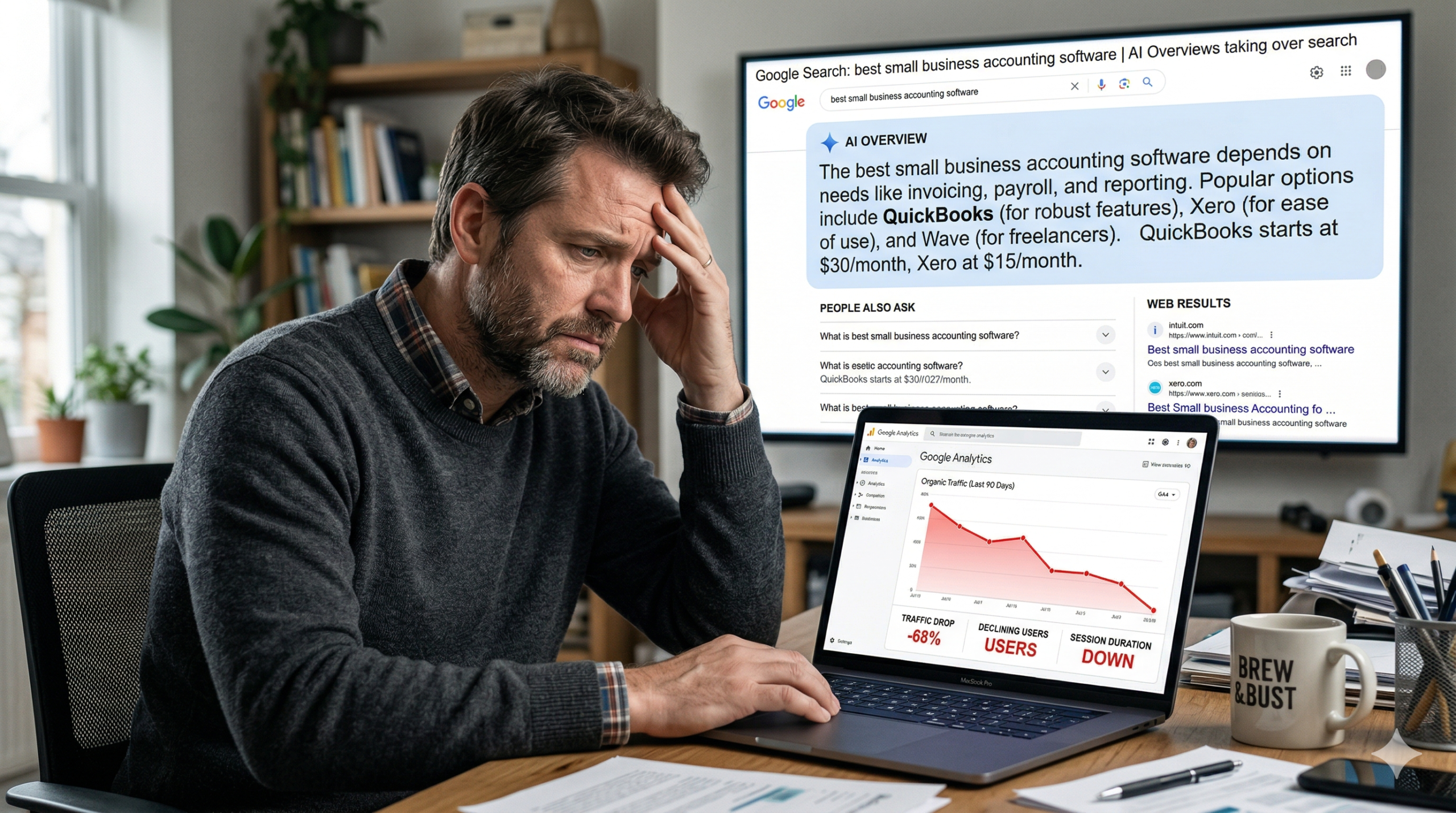
You checked your analytics again. The numbers are down — again.
You didn’t stop publishing. You didn’t change your site. You didn’t do anything wrong. But something is clearly different, and you can’t figure out what it is.
Here’s the honest answer: it’s not you. Google changed how it works — and most small business owners found out only when the traffic stopped showing up.
This post explains exactly what happened, why your site is feeling it, and what you can do about it right now.
The Real Reason Your Traffic Is Falling
Google used to work like a directory. You asked a question, it handed you ten links, you clicked one. That model built the entire content marketing industry. Businesses published blog posts, Google sent them visitors, and the cycle continued for over a decade.
That cycle is broken now.
AI Overviews changed the rules overnight
When someone types a question into Google today, they often see a blue AI-generated summary box right at the top of the page — before any links appear. Google answers the question directly. The user reads it and closes the tab.
Your site never gets the visit.
Since Google AI Overviews rolled out at scale, click-through rates for informational search queries have dropped by up to 34.5%. That’s not a rounding error. That’s a structural collapse in how organic traffic flows to content-based websites.
Zero-click searches are now the default
A zero-click search is exactly what it sounds like: the user searches, gets their answer on the results page, and never clicks anything. Industry data shows this is now the most common outcome for informational queries.
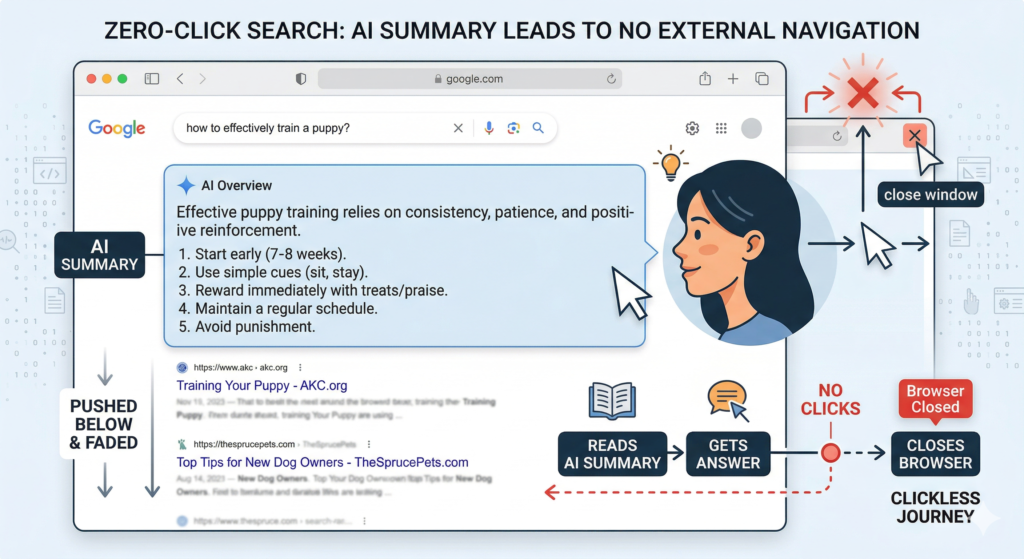
How-to guides. FAQ pages. Explainer posts. Definition articles. These are the exact content types that built most SMB blogs — and they’re the categories getting absorbed directly by AI search results.
This isn’t a phase you can wait out
A lot of business owners are hoping this blows over the way old Google updates did. It won’t.
According to experts, news publishers alone are projecting a 43% drop in search referral traffic by 2029. That trend started in 2024 and is accelerating. This is not a ranking penalty. It is a permanent redesign of how search works.
Why Small Business Sites Are Getting Hit the Hardest?
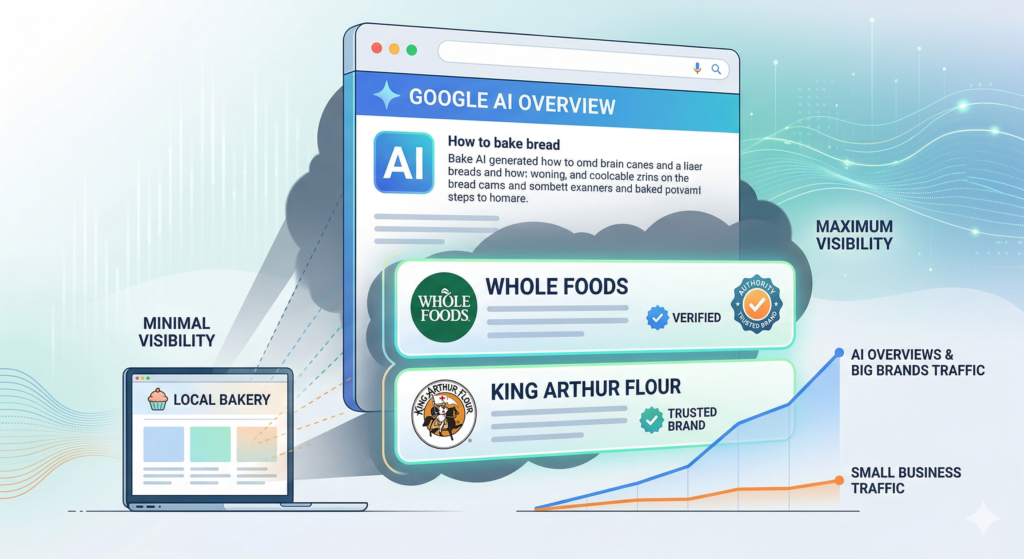
Large brands have full SEO teams watching this in real time. Small business owners are running a company and checking their traffic reports every few weeks. By the time the drop is obvious, it’s been happening for months.
Informational content took the first hit
Blog posts, how-to guides, product explainers, FAQs — the content most SMB sites are built around — are exactly what AI Overviews were designed to replace. Google doesn’t need to send someone to your post to explain “what is a marketing funnel” anymore. It generates the answer on the spot.
If your traffic was built on informational keywords, you’ve probably already felt this.
E-E-A-T requirements got much stricter
Google now uses a framework called E-E-A-T — Experience, Expertise, Authoritativeness, and Trustworthiness — to decide which content is worth surfacing. In 2026, this matters more than ever.
Content without a named author, visible credentials, or a recognizable brand behind it is quietly losing rankings. If your blog posts don’t signal who wrote them and why they’re qualified to write it, Google is already deprioritizing them.
Thin content is being quietly removed from results
Google’s algorithm has gotten aggressive about consolidating overlapping content. If you have multiple short posts on similar topics, Google picks one to rank — usually the most comprehensive one, and usually not yours.
The sites gaining traffic in 2026 are publishing fewer posts but making each one significantly more thorough. Volume publishing is a liability now, not an advantage.
What This Actually Means for Your Business
Not everything is broken. It’s important to separate what’s genuinely at risk from what still works.
Buyer-intent traffic is still being sent to websites
Google doesn’t answer “best marketing agency in Calgary” with an AI summary. It shows results. Transactional and commercial queries — where someone is ready to hire, buy, or book — still drive clicks.
If your site was built around informational content only, that’s a strategy problem. If you have pages targeting people who are actively looking for what you sell, those pages are still working.
AI search has created a new visibility channel
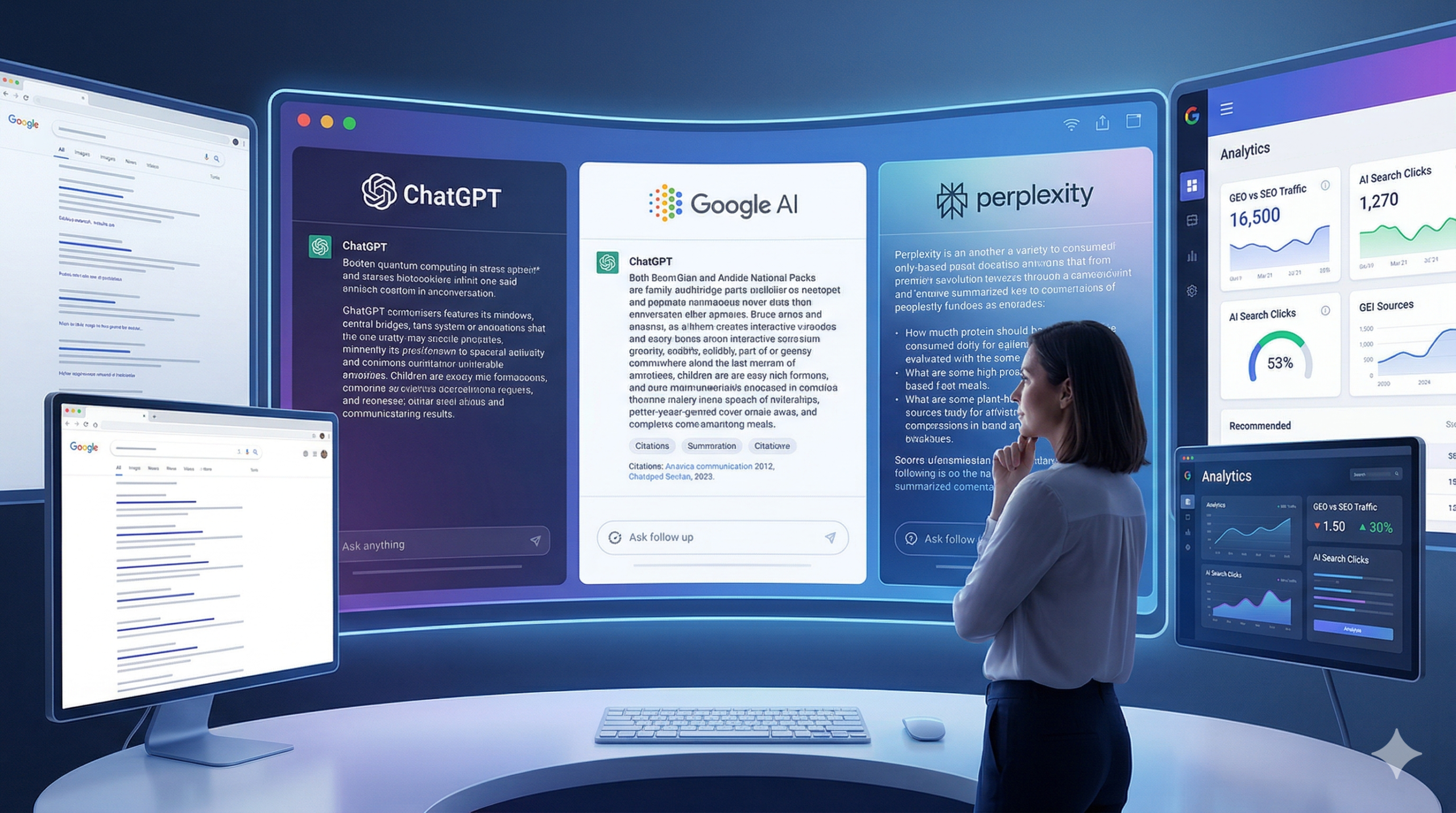
Here’s something most people don’t realize yet: the AI tools generating those search summaries — Google, ChatGPT, Perplexity — are pulling from somewhere. They cite sources. They surface content they consider authoritative and well-structured.
If your content is built correctly, it can appear inside those AI-generated answers. This is called Generative Engine Optimization (GEO), and it’s the next layer of search visibility that most small businesses haven’t touched yet.
Understanding how AI helps with SEO is no longer optional. It’s what separates businesses that recover from ones that keep watching their numbers fall.
The window to move first is still open
Businesses that adapt their content strategy to GEO right now are the ones AI tools will cite and recommend in 2027. That window won’t stay open forever. The more competitors in your space optimize for AI visibility, the harder it gets to break through.
3 Things You Can Do This Month
You don’t need to throw out your entire content strategy. Start here.
1. Run a quick audit of what you already have
Open Google Search Console. Pull your top pages from 18 months ago and compare them to today. Any page that lost significant impressions is a candidate for an AI Overview replacement.
Identify whether those pages are informational posts or buyer-intent pages. The fix is different for each, and mixing them up wastes time.
2. Restructure your existing best content
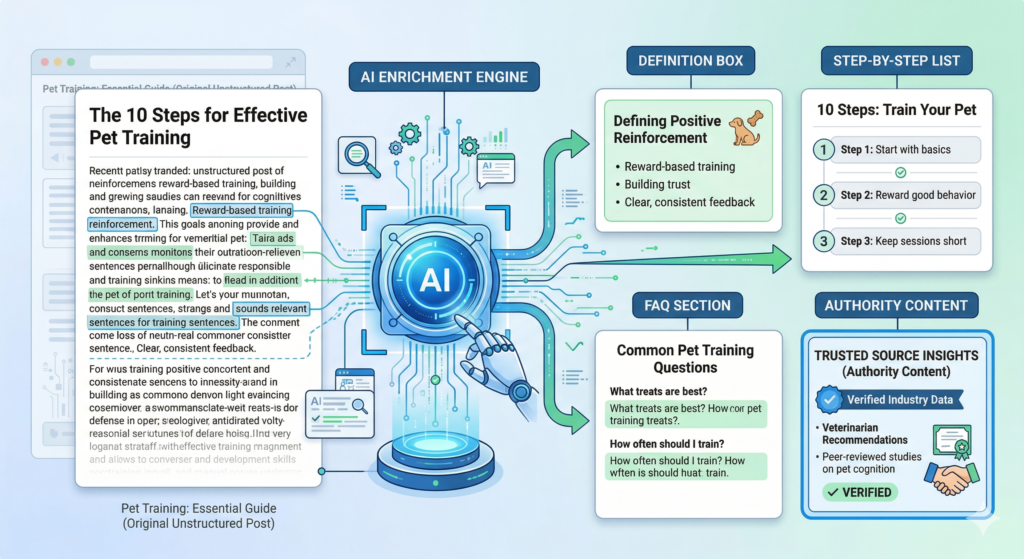
Before writing anything new, go back to your top five blog posts. Add three things to each one:
- A clear one-paragraph definition at the top (AI tools index this first)
- A numbered list, comparison table, or step-by-step breakdown inside the post
- A FAQ section at the bottom with at least five real questions your customers ask
These structural signals are what both Google and AI Overviews look for when deciding whether to cite a piece of content. Applying AI SEO techniques to pages you already have often outperforms writing new content from scratch.
3. Write fewer posts — but write them with more authority
Generic information gets absorbed by AI. Specific, experience-driven content gets cited by it.
Stop writing posts that simply explain things. Start writing posts that document your actual expertise: how you approach a problem, what you’ve seen work for clients, what frameworks you use. That kind of content is what Google and AI tools are looking for in 2026.
Your traffic dropping isn’t a sign that you failed. It’s a sign the rules changed while you were busy running your business.
The fix isn’t more content. It’s smarter content — built for how search actually works now, not how it worked three years ago.
The businesses recovering fastest right now are combining solid SEO fundamentals with a GEO content strategy designed for AI visibility. You need both. Neither alone is enough in 2026.
If you want a clear picture of which pages on your site are losing visibility — and what to prioritize first — Tabula’s free SEO and GEO audit walks you through exactly that. No pitch, no obligation. Just a straight answer on where you stand.
Frequently Asked Questions
Google AI Overviews now answer questions directly on the search page. Users get their answer without clicking. Your content never gets the visit.
Yes. Industry data shows 73% of B2B websites saw significant organic traffic losses between 2024 and 2025. You’re not doing anything wrong.
Informational content — how-to guides, FAQs, explainers, definitions. These are exactly what AI Overviews replace.
No. This is a structural change in how search works, not a temporary algorithm update. Waiting it out is not a strategy.
A zero-click search is when the user gets their answer on the results page and never clicks any website. It’s now the most common outcome for informational queries in 2026.
SEO gets you ranked on Google. GEO gets your content cited inside AI-generated answers on Google, ChatGPT, and Perplexity. You need both in 2026.
Open Google Search Console. Find pages that lost impressions in the last 12 months. Fix structure and authority on those pages before creating anything new.