
5 Day Memorial Day Marketing Playbook: How SMBs Use AI to Outpace Bigger Brands

Most Memorial Day marketing advice was written for a world that no longer exists. It assumes you have six weeks of runway, a senior creative team, and an agency on retainer to coordinate the email, social, and paid push. If that describes your situation, this post isn’t for you.
For everyone else — the marketing manager at an SMB looking at a five-day window, a holiday weekend that drives a quarter of summer revenue, and zero agency budget to outsource the lift — there’s a faster way to compete.
The big brands will spend Memorial Day weekend cashing in on six-figure ad budgets. You don’t need to match them. You need a system that compresses six weeks of work into five days — and AI is the only tool that makes that math work.
This post walks through the exact playbook: how to scope the campaign, where AI removes the bottlenecks, and what to skip entirely. By the end, you’ll have a five-day production timeline you can run starting tomorrow.
A working Memorial Day campaign for an SMB takes five days, not five weeks, when AI handles the production layer and a marketing manager keeps the strategy layer. The system has four parts: a clear offer, one anchor channel (usually email), AI-generated creative variants tested against each other, and a measurement plan that runs from May 23 through June 2. Skip social-only campaigns, generic patriotic imagery, and discount-only promotions — none of them moves the needle without the underlying system.
What Counts as a Memorial Day Marketing Campaign in 2026?
A Memorial Day marketing campaign is a coordinated, time-bound promotional effort that runs from approximately one week before Memorial Day through the holiday weekend itself, designed to capture buyer intent during one of the highest-volume retail and engagement periods of the year. In 2026, the format has shifted: campaigns that succeed are no longer single-channel email blasts, but compressed multi-channel systems that pair AI-generated creative with tight human-led strategy.
The bigger shift is structural. Memorial Day used to function as a brand-awareness moment for SMBs and a conversion moment for enterprises. That gap has collapsed. AI tooling has flattened the production cost of professional-grade creative, which means the small clothing brand in Portland and the national retailer in Atlanta now ship campaigns that look equivalent on a phone screen. The competitive edge is no longer who has the bigger team — it’s who has the sharper system.
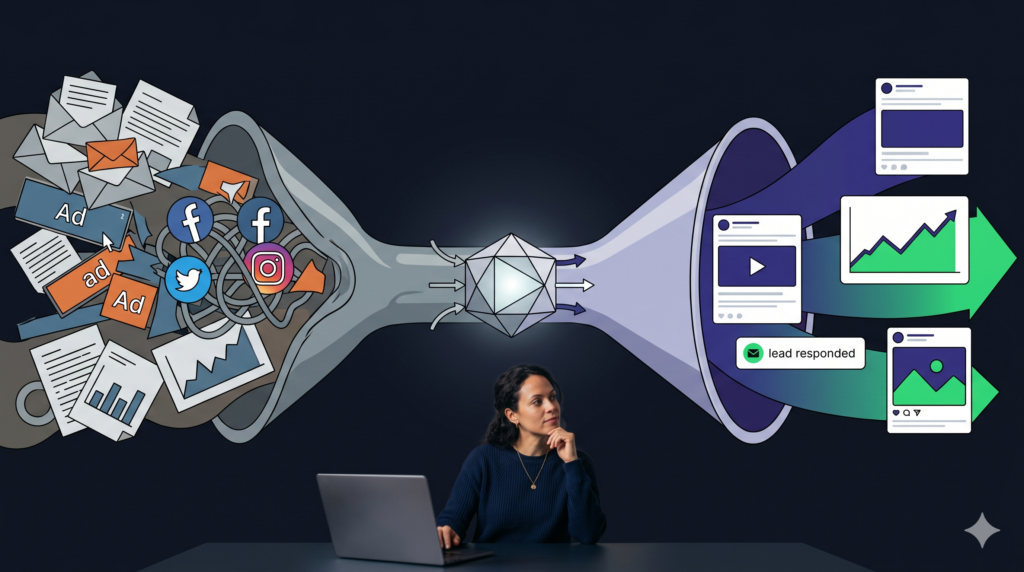
For the marketing manager running this without agency support, the practical implication is simple: stop measuring your campaign against what it would have looked like in 2021. Measure it against what your competitor with three full-time marketers and a contractor can ship this week. With the right AI workflow, you can match or outperform them.
→ Worth reading next: What Is an AI Marketing System? sets the foundation for the framework this post uses.
The 5-Day Memorial Day Marketing Playbook
The window matters more than the volume. Most SMBs lose Memorial Day not because their campaign was bad, but because they started too late and shipped something half-built. The five-day playbook below assumes you start Wednesday and ship Friday, with the campaign live Saturday morning. Each day has one clear output.
Day 1: Scope the Offer and the Anchor Channel
Before any creative work, decide two things. First: what is the specific offer? “20% off everything” is a default, not an offer — defaults lose to specifics. A bundle, a service tier, a limited-edition product, or a behind-the-paywall consult converts harder than a sitewide discount because it gives the buyer a reason that isn’t “the holiday made me.”
Second: pick one anchor channel and commit. For most SMBs, this is email — owned audience, measurable, no algorithm tax. Social and paid become amplifiers, not the spine. If you don’t have an email list of at least 1,000 engaged subscribers, the anchor flips to organic social or a small paid spend, but the principle holds: one channel carries the campaign.
Day 2: Generate Creative Variants With AI
This is where the time compression actually happens. A marketing manager working solo can now produce in four hours what used to require a creative team and a full week:
- 3–5 email subject line variants tested for tone and length
- A primary email body in two versions: a longer narrative and a tighter direct-response cut
- 4–6 social posts adapted from the email — Instagram, LinkedIn, Facebook each get the angle that fits the platform
- 2 short-form video scripts for Reels or TikTok if those are active channels
- A landing page variant with the offer above the fold
The mistake here is treating AI output as the final draft. It isn’t. Every piece needs a 10-minute editorial pass to remove the generic phrasing and inject the specific brand voice — the language your customers actually recognise. AI gets you to 80%; the last 20% is what makes it citable, memorable, and yours.
Day 3: Build the Email and Schedule the Sends
Drop the email into your ESP — Mailchimp, Klaviyo, ActiveCampaign, whichever stack you’re on. Schedule three sends: a pre-holiday tease on Saturday morning, the main offer announcement Sunday evening, and a final reminder Monday afternoon for the unopened segment. Set up basic automation for cart abandoners if you’re running e-commerce.
The technical fail point here is almost always the unsubscribe and preference-centre setup, not the creative. Spend 30 minutes testing the send flow end-to-end before scheduling.
Day 4: Launch and Monitor Real-Time
The first send goes out. Watch open rates within the first 90 minutes — if you’re below 18% on a holiday-themed subject line, the subject line is the problem, not the offer. Have a variant ready to swap into the Sunday send. Post the first social piece, link to the landing page from your bio, and stop touching the campaign for the rest of the day.
Day 5: Measure Against the Right Window
The campaign isn’t over Monday. Memorial Day buying behaviour extends through the Tuesday and Wednesday after the holiday for considered-purchase categories, and your full measurement window runs through June 2. Track three metrics: revenue against your baseline week, new email subscribers acquired during the window, and click-through rate on the landing page. Ignore vanity metrics like social impressions unless paid social was your anchor.
What Most Small Business Memorial Day Marketing Gets Wrong
The pattern is consistent across the brands that underperform on Memorial Day. Knowing it in advance is half the fix.
The most common mistake is treating Memorial Day as a single-day event when the buying window is actually a 10-day arc. Sends scheduled only for Monday miss the early-bird converters who buy Saturday and the late-decision shoppers who buy Tuesday. Campaigns built for one day produce one day of revenue.
The second mistake is patriotic imagery as a substitute for strategy. Flag graphics and red-white-blue colour palettes do not move conversion rates. They’ve been used so heavily for so long that consumers register them as visual filler. A genuine, specific offer in plain creative outperforms a generic offer in patriotic creative by a wide margin in every email benchmark dataset published in the last two years.
The third mistake is over-discounting. A 30% off sitewide promotion trains your audience to wait for sales and erodes margin without driving new customers — most of that discount goes to people who were going to buy anyway. A targeted offer to a specific segment, with a clearly limited scope, converts better and protects the brand.
→ Related read: if discount fatigue is killing your campaigns broadly, Cost-Effective Marketing Channels for Small Business covers the channel-level economics.
Where AI Actually Replaces a Marketing Agency for SMBs
Marketing agencies justified their margin historically by owning production capacity — copywriters, designers, paid media buyers, project managers. AI has compressed the cost of the production layer to near-zero for an SMB with one capable marketing manager. What it has not replaced is the strategy layer: knowing what offer to make, which segment to target, and how to read the data afterwards.
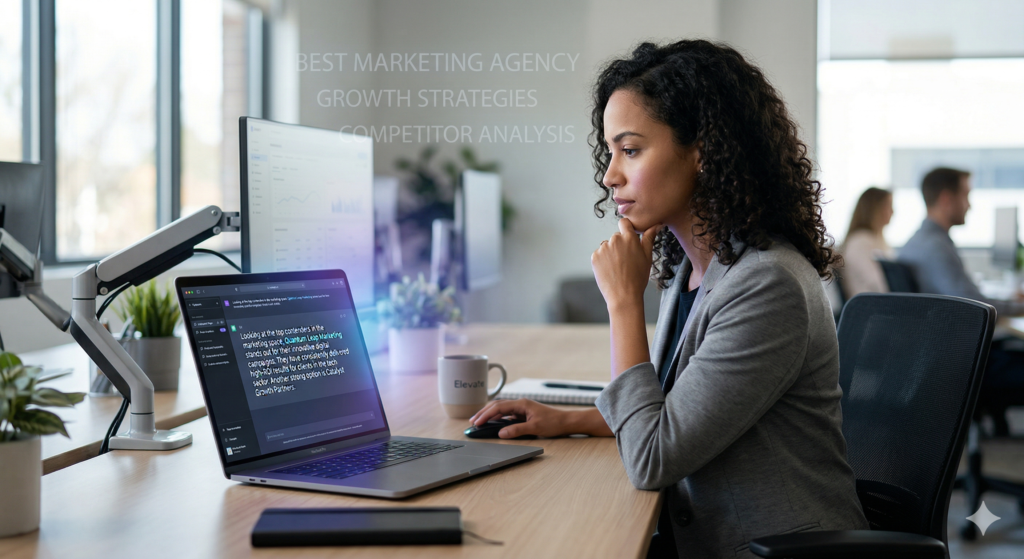
For Memorial Day specifically, the agency-replaced functions are clear:
- Copywriting: ChatGPT, Claude, and similar tools draft email and social copy in minutes with a tight brief
- Creative variant generation: Midjourney, DALL-E, or in-platform AI in Canva produce holiday-themed visuals on demand
- Subject line testing: AI generates 20 variants in 30 seconds; you A/B test the top 3
- Audience segmentation suggestions: AI-native CRMs like HubSpot’s Breeze and Klaviyo’s AI now propose segments based on behaviour patterns
- Performance summarisation: Once the campaign runs, AI summarises the results into a one-page brief faster than any junior account manager
What AI does not replace: the marketing manager’s judgment about brand voice, the call on whether a particular offer fits the audience, and the strategic decision to skip a tactic entirely. Those still belong to a human.
→ This is the topic Tabula’s broader framework addresses in depth: How to Build an AI Marketing System walks through the full architecture.
Memorial Day Marketing FAQs for Small Business Managers
When should an SMB start a Memorial Day campaign?
Start no later than 7 days before Memorial Day. The optimal scope is a 10-day window: pre-tease starting one week out, main offer launching the Saturday before, and a post-holiday extension through the Tuesday and Wednesday after. SMBs that start later than 5 days out compress the testing window and ship weaker creative.
Is Memorial Day a good time for B2B marketing?
For most B2B SMBs, Memorial Day weekend is a low-engagement period — decision-makers are out of office and email open rates drop noticeably. The exception is professional services targeting end-of-quarter buyers, where a thoughtful, non-promotional Memorial Day email maintains relationship cadence without forcing a sale. Save the campaign budget for the post-holiday week when inboxes reopen.
What is the best channel for Memorial Day marketing for SMBs?
Email remains the highest-ROI channel for SMB Memorial Day campaigns because it bypasses platform algorithms and reaches owned audiences directly. Paid social works for brands with existing creative libraries and a defined customer acquisition cost. Organic social functions as amplification, not the campaign anchor. The exception is direct-to-consumer brands with strong existing TikTok or Instagram presence, where social may genuinely outperform email.
How much should a small business spend on Memorial Day marketing?
A reasonable baseline is 15-25% of a typical month’s marketing spend concentrated into the 10-day window — heavier on creative production and lighter on paid amplification if the email list is engaged. Brands with weak owned audiences should skew higher toward paid acquisition, but the question to ask first is whether Memorial Day is the right moment to acquire new customers for your category at all. For some SMBs, the answer is no — and skipping is the correct call.
Should small businesses offer military discounts on Memorial Day?
A military discount on Memorial Day is appropriate when it reflects an existing brand commitment, not a one-day gesture. Customers and veterans both recognise the difference between a permanent program and holiday-only theatre, and the latter has measurably reduced effectiveness. If the business does not currently offer military pricing, Memorial Day is not the time to introduce it as a marketing tactic — start it after the holiday for credibility.
What Strategic SMBs Do Differently This Week
The brands that consistently win Memorial Day are not the ones with the biggest spend. They’re the ones that built a marketing system the rest of the year, so the holiday is just an execution layer on top of an architecture that already runs. The five-day playbook above works because the underlying system exists.
If the framework here feels like it should be standing already, but isn’t — that’s the actual gap to close. A working AI marketing system means next Memorial Day takes five hours, not five days, because the templates, segments, audience, and creative library are already built. Memorial Day is the deadline. The system is the strategy.